

How ASO Evolved into a Complete App Growth Strategy | App Optimax
Discover how ASO evolved from basic keyword tweaks into a full-scale growth strategy. Learn the stages, roles, and frameworks behind modern App Store Optimization.
Introduction: The Birth of ASO
When Apple and Google launched their app stores in 2008, they didn’t just create a new marketplace — they created a new marketing discipline: App Store Optimization (ASO).
At first, developers focused only on adding the right keywords to their app titles and descriptions. But over time, ASO evolved far beyond keyword stuffing — it became a complete growth strategy combining data, design, psychology, and technology.
Today, successful ASO means making your app discoverable, desirable, and downloadable.
1. From SEO to ASO: A Quick History Lesson
In the early days, app store search worked much like Google Search. Developers used long app titles like:
“Weather Forecast Radar: Local Storm Alerts, Live Maps & Widgets”
It worked — until stores began cracking down on keyword stuffing.
Apple first limited titles to 50 characters in 2016, then to 30 characters in 2017. Google followed a similar path.
Key takeaway:
ASO started as “SEO for apps” — but evolved as app stores began focusing more on user experience and conversion quality rather than just keyword density.
2. Modern ASO: Beyond Keywords
Today’s ASO is far more strategic. It involves three core pillars:
- Visibility: Making sure your app appears in search results, charts, and featured sections.
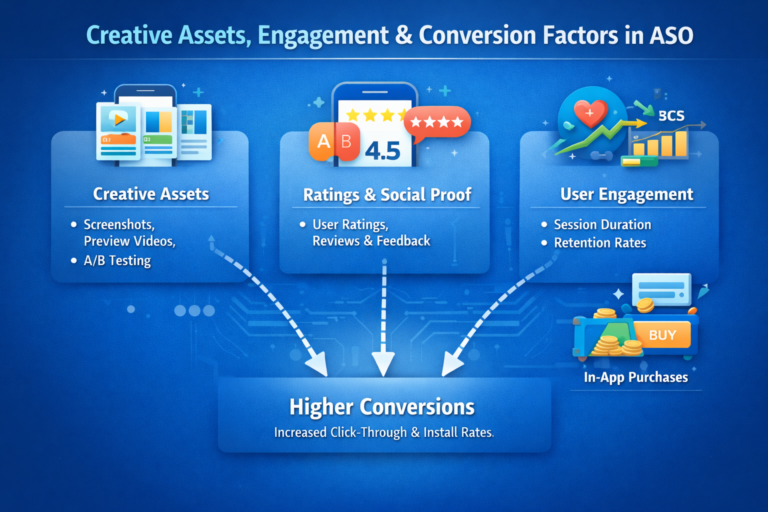
- Conversion: Convincing users to install your app once they discover it.
- Retention: Keeping users engaged and satisfied after installation.
Modern ASO Definition:
“The process of improving an app’s visibility and maximizing its appeal throughout its life cycle to increase installs.”
ASO is now a continuous loop of data, testing, and optimization.
3. The ASO Team: Roles and Responsibilities
As ASO matured, the need for specialized roles grew. Here’s what a typical ASO team might look like:
| Role | Responsibility |
|---|---|
| Keyword Researcher | Finds high-traffic keywords and tracks their rankings. |
| Copywriter | Crafts compelling metadata — titles, subtitles, and descriptions. |
| Graphic Designer | Designs icons, screenshots, and visuals that attract users. |
| Data Analyst | Measures performance, traffic, and conversion impact. |
| Developer | Publishes updates, improves app performance, and ensures ASO compatibility. |
| Project Manager | Keeps all efforts aligned and on schedule. |
Tip:
Small teams can combine roles — for instance, a designer can manage visuals and videos, while an ASO lead handles keywords and analytics.
4. How ASO Connects with Other Marketing Channels
Modern ASO doesn’t operate in isolation. It integrates deeply with other marketing areas:
a) Paid User Acquisition (UA)
Running ads on Google, Meta, or TikTok influences your organic rankings. More installs improve visibility and strengthen keyword performance.
b) Branding
ASO assets — such as your app icon or screenshots — should align with your brand identity. Consistent branding builds trust and improves conversion rates.
c) Influencer and Partnership Marketing
Collaborating with influencers drives external traffic to your app listing, boosting visibility and keyword strength.
d) Referral and Retention Programs
Apps that retain users perform better in search rankings. Both Apple and Google reward apps that maintain strong engagement and retention metrics.
5. The ASO Stack: The Blueprint of Success
One of the most influential ASO frameworks, introduced by Phiture, is known as the ASO Stack.
It defines four key pillars for success:
| Pillar | Goal |
|---|---|
| Visibility | Get more people to discover your app. |
| Conversion | Turn store visitors into downloads. |
| Tools | Use data-driven platforms to track, test, and optimize performance. |
| Supporting Insights | Align with cross-functional teams and use insights from analytics and advertising. |
This framework ensures every ASO effort remains structured and scalable.
6. Strategic Execution: Start Simple, Scale Smart
Many marketers rush into advanced ASO tactics too soon. The most effective approach is to start with fundamentals and build gradually.
Example Workflow:
- Begin with keyword research and metadata optimization.
- Improve your visuals — app icon, screenshots, and videos.
- Analyze performance using App Optimax’s built-in insights.
- Scale your strategy through localization and A/B testing.
Tip:
Focus first on elements you can control — metadata, visuals, and keyword targeting — before expanding into advanced tactics like paid ads or regional optimization.
Key Takeaways
- ASO began as simple keyword optimization but is now a comprehensive, multi-layered discipline.
- A successful ASO strategy requires collaboration across creative, technical, and analytical roles.
- The ASO Stack offers a proven framework focused on visibility, conversion, tools, and insights.
- Combining data with creativity delivers the strongest and most sustainable growth results.
Conclusion: Why This Matters for App Optimax Users
The world of ASO continues to evolve — and staying ahead requires constant learning, testing, and adaptation.
App Optimax is designed around these very principles. Our tools help you:
- Discover the right keywords
- Analyze competitors effectively
- Optimize your store listings for higher conversion
- Track performance with actionable, data-driven insights
Start your ASO journey with App Optimax today — where visibility meets growth.
Tags:
ASO, App Optimization, App Store Optimization, App Growth, App Optimax, Keyword Research, Mobile Marketing, ASO Strategy